How to Set Up Targeting in Facebook Ads: 5 Tips for a Successful Launch
A few years ago, Facebook targeting felt like an engineering task: stack interests, narrow down audiences, exclude segments, and manually control delivery.
Today, it’s the opposite.
Meta has largely removed micro-targeting and handed key decisions over to the algorithm. Ads now depend less on who you choose to target and more on what you show and what signals the algorithm receives.
If you’re launching campaigns based on outdated guides, there’s a high chance you’ll burn your budget before the learning phase even kicks in.
Let’s break down how Facebook Ads targeting actually works now — and what to focus on when launching.
Why Old Targeting Strategies No Longer Work
The biggest shift in recent years is Meta’s move toward AI-driven optimization and automated targeting.
By 2025, the platform fully removed the ability to exclude audiences by interests and behaviors. Advertisers can no longer “clean” audiences manually like before.
Meta’s logic is simple: broader audiences = faster learning + lower CPA without heavy restrictions.
At the same time, privacy restrictions have tightened — especially in Europe. Users can now limit personalized ads, which makes targeting less precise.
Short version: Facebook finds the audience for you now.
Tip #1: Start with the Conversion Event, Not the Audience
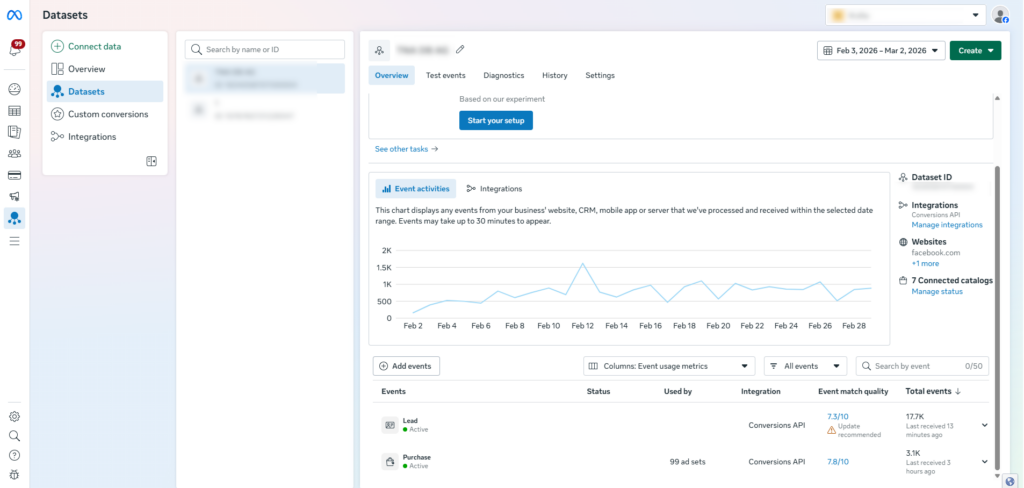
The most common beginner mistake is launching ads without proper event tracking. Meta doesn’t optimize for clicks — it optimizes for signals:
- Purchase
- Lead
- Complete Registration
- Add to Cart
If your event setup is broken, the system simply doesn’t know who to find.
Minimum required setup:
Meta Pixel
Conversions API (CAPI)
Proper event configuration in Events Manager
Without CAPI, you lose a chunk of data due to privacy restrictions and ad blockers — which weakens optimization significantly.
Tip #2: Go Broad with Your Targeting
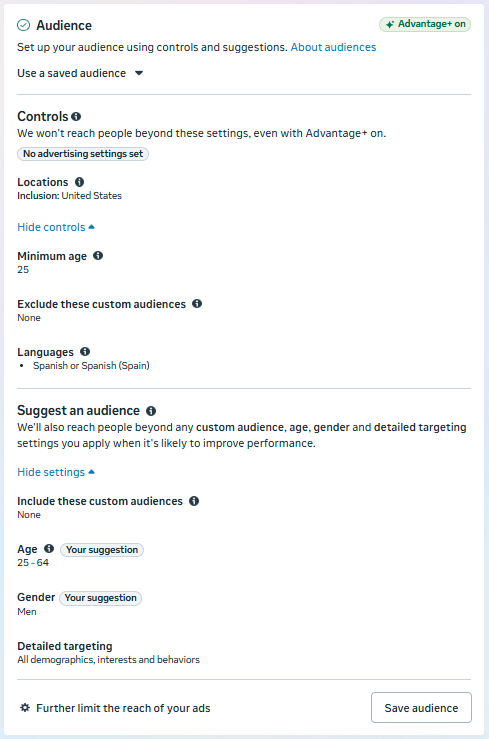
Back in the day, media buyers used to slice audiences by interests, behaviors, devices, and more. Now, Meta tests thousands of micro-segments faster than any human ever could. Broad targeting gives the algorithm room to learn. You set the basics — GEO, age, language — and let the system find converting users.
Why this works:
- the algorithm processes thousands of behavioral signals;
- manual interest targeting limits learning;
- narrow audiences tend to drive CPM up.
The current baseline setup looks simple: pick GEO, age, and language. Data shows that broad audiences combined with diverse creatives often deliver better ROI than over-segmented setups.
Tip #3: Set Up Pixel + Conversions API
After the iOS privacy updates, browser-based tracking became unreliable. Meta effectively made the Pixel + Conversions API combo the new standard for ad measurement.
To simplify:
- Pixel tracks user actions in the browser;
- CAPI sends events directly from the server.
Together they provide more accurate attribution, more stable algorithm learning, and fewer lost conversions. Without this setup, Facebook often optimizes based on incomplete or distorted data.

Tip #4: Focus on High-Quality Creatives
The biggest shift in recent years: the algorithm now analyzes copy, visuals, the first seconds of the video, and user engagement. In practice, the creative itself helps define the audience.
Meta is pushing this even further — its AI can now automatically generate ad variations to improve CTR.
What works in 2026:
- a strong hook in the first 2–3 seconds,
- mobile-first formatting,
- subtitles (most users watch without sound),
- native-style content adapted for Reels.
Video now takes up the majority of content consumption inside the Meta ecosystem.
Tip #5: Don’t Edit a Winning Campaign
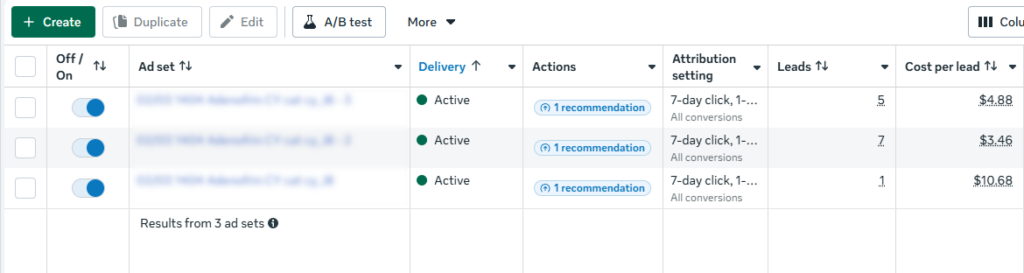
One of the biggest mistakes that kills algorithm learning is constant editing. Any major change to audience, budget, or optimization can reset the learning phase.
The correct scaling logic today is:
- Find a winning setup.
- Duplicate the ad set.
- Test changes in the copy, not the original.
This way you preserve optimization while still being able to test new hypotheses.
What Else Has Changed in Meta Advertising
There are several factors many advertisers still overlook:
1. Privacy restrictions in Europe
Users can now limit data sharing, which makes personalized targeting less reliable. As a result, the algorithm relies more heavily on context and creative signals.
2. Less manual control
Meta is gradually merging and simplifying interest targeting, turning it into suggestions rather than strict filters.
3. Faster learning, but higher data requirements
Modern algorithms learn quickly — but only when they receive enough conversion data. Without sufficient event volume, campaigns often fail to exit the learning phase.
Conclusion
In short: Facebook targeting is no longer about precise manual interest stacking. The platform finds the audience on its own, and fighting the algorithm is pointless. Your job is to define the right objective, feed the system clean data, and provide strong creatives.
There’s no need to overcomplicate structure, split audiences into tiny segments, or build dozens of ad sets. It’s better to start simple, go broad, and focus on testing combinations.
Ultimately, success comes down to a system approach: clear objective, clean tracking, and a structured testing strategy. Everything else is handled by the algorithm.
P.S. For profitable offers, visit the Webvork website or contact your personal manager.