Content Protection: What It Is and How It Affects Your Campaigns
Anyone who runs traffic has been there. Your campaign is profitable, metrics look stable, you’re already thinking about scaling… and then one day it just falls apart.
You didn’t change anything: same creative, same landing page — but the traffic feels completely different. CTR drops, conversions disappear, CPM starts climbing.
Back in the day, people blamed everything — “algorithm update”, “burned account”, you name it. Now, more often than not, there’s one reason behind it: Content Protection.
In this article, we’ll break down what it is and how to deal with it.
How Content Protection Works
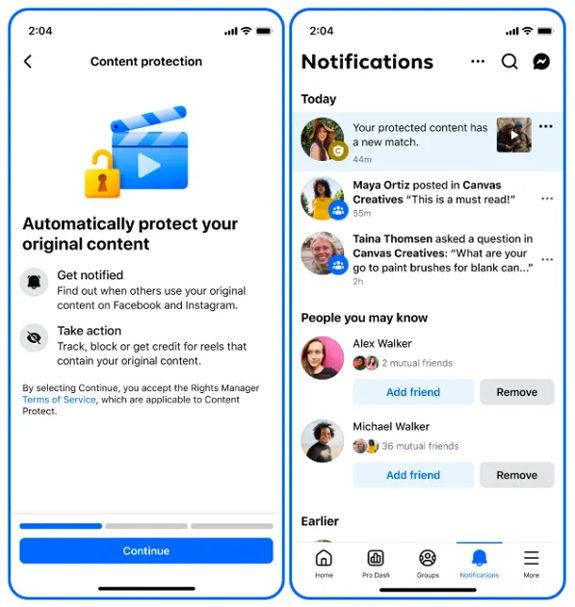
Content Protection (CP) is a set of technologies and algorithms designed to check whether your content complies with certain rules.
This can include signature matching (when the system recognizes original branded materials and blocks unauthorized usage) as well as traffic behavior analysis (detecting patterns associated with fraud or low-quality traffic).
In most cases, CP operates on multiple layers:
- a database of protected creatives and assets (often using AI-generated signatures)
- behavioral analysis of user activity
- comparison against known patterns and templates
- real-time actions like blocking, warnings, or throttling reach
The key thing to understand: CP doesn’t always work like a standard ad rejection.
More often, it’s silent traffic filtering or reduced delivery — something you don’t notice right away.
Why It Exists in the First Place
From the platform’s perspective, this was inevitable. Imagine you’re a big brand. You’re spending millions on marketing, design, UGC, funnels. Then an affiliate comes in, copies your approach — and sometimes even outperforms you.
Add to that:
- click fraud
- fake landing pages
- pseudo-news funnels
- brand impersonation
At some point, platforms just said: “enough.” To protect their assets and maintain ad ecosystem quality, major platforms like Meta, TikTok, and Google started rolling out stricter content control systems.
This isn’t really about going after affiliates. It’s about protecting advertisers and keeping control over how content is used.
Content Protection in Affiliate Marketing
For affiliates, CP became noticeable around late 2024 — early 2025. Before that, it was mostly standard moderation rules. Now the systems are smarter — and way more aggressive.
When CP flags your creative or landing page, several things can happen:
- reduced delivery / reach
- sudden CTR drop
- misclassification of legit traffic
- warnings or temporary limits
And here’s the important part: this is not the same as a Meta or Google ad rejection.
Your ad can stay active — but its performance gets quietly wrecked.
The Biggest Problem: Silent Performance Drops
The worst-case scenario with Content Protection is when everything looks fine on the surface — but results collapse. No bans. No policy violations. Yet CPM spikes, conversions tank, and performance becomes unstable.
That’s often your signal: your traffic is being filtered. False positives do happen, especially when your creatives use elements that resemble protected content — similar colors, layouts, typography, or visual styles.
For affiliates, this means one thing: higher volatility and way less predictability.
How to Adapt (and Not Get Killed by CP)
Here’s the uncomfortable truth: just making “unique creatives” isn’t enough anymore. Content Protection has evolved past surface-level checks like colors or fonts.
What actually works now is reframing the idea, not just redesigning it. You need a different angle, a different hook, a different storytelling structure — not just a visual tweak.
At the same time, post-click behavior matters more than ever. If users bounce fast, act weird, or don’t engage — the system takes that as a quality signal. Even a good creative can get suppressed if user behavior looks off.
Another thing people underestimate is scaling. Hard scaling a single winning combo looks unnatural from the system’s perspective. Gradual scaling with variation is much safer than just pushing volume.
Where Most People Lose Money
Here’s the paradox: a lot of affiliates trigger CP themselves. A classic example — taking a winning creative and cloning it into dozens of “variations” that are basically identical. To a human, they look different. To the system, it’s the same pattern repeated. Same with landing pages. If the structure stays the same and only minor elements change, it gets recognized very quickly.
And then there’s “fake uniqueness” — running creatives through filters, cropping, or slightly editing them. That’s no longer a workaround. It’s a trigger.
Final Thoughts
We’ve already seen anti-fraud systems evolve. We’ve seen moderation get stricter.
Now content control has reached a new level.
Content Protection isn’t temporary — it’s the new reality of digital advertising. It improves traffic quality, protects brands, and directly impacts affiliate performance. If you don’t adapt, you’ll lose both traffic and profit.